Landscaping can change how water, roots, and soil behave around a house more than many owners expect. A bed that looks tidy, a new patio that feels practical, or a sprinkler zone that keeps everything green can also shift moisture around the foundation in uneven ways. That is where small design choices start to matter. What looks harmless at the surface can act very differently below grade.
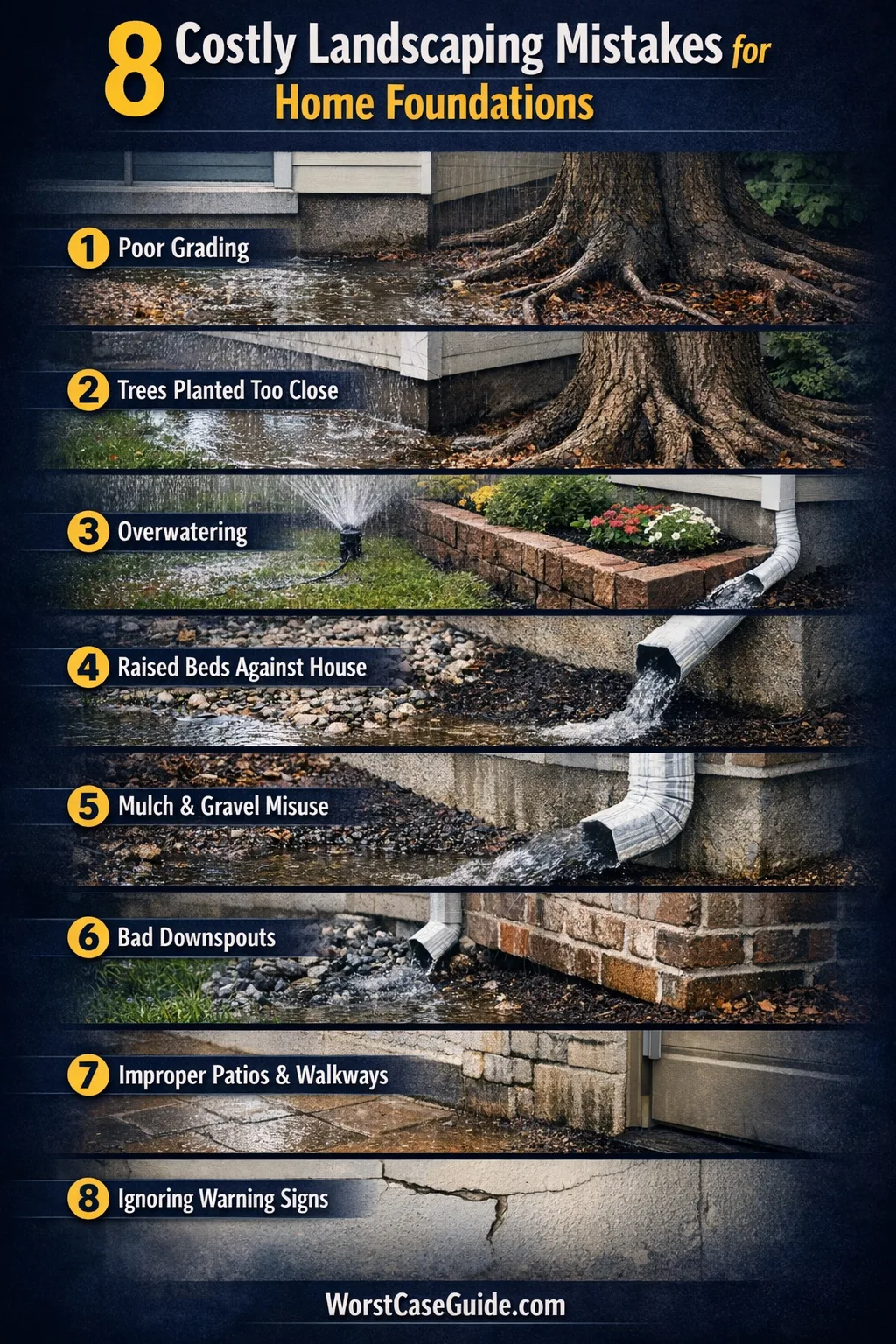
Home foundations rarely get damaged by one dramatic yard mistake alone. The usual pattern is slower and quieter: a little ponding after rain, a little soil settlement near the wall, one side staying wet while another dries out, roots searching for moisture, then small interior signs that are easy to explain away. In that sense, the landscape works a bit like a plumbing map drawn in soil. The surface tells one story. The water tells another.
Why This Topic Is Risky
Foundation trouble often begins as a water-management problem, not a concrete problem. Poor grading, trapped runoff, saturated backfill, long dry spells around expansive soil, and roots competing for moisture can all create movement. In smaller projects, the issue may stay cosmetic for a while. In larger systems, the same mistake can affect drainage, pest exposure, basement moisture, doors, floors, and repair costs at the same time.
Common Assumptions That Create Hidden Risk
- If the yard looks level, it must be draining well. A surface can look neat and still direct runoff toward the house.
- Plants cause problems only when roots touch concrete. In many cases, the bigger issue is moisture change in the soil, not direct impact.
- More watering is always safer than dry soil. Overwatering near one side of the home can be just as disruptive as letting another side dry out.
- Mulch, gravel, or fabric will fix drainage. They can change appearance and maintenance needs, but they do not replace grade, discharge, or drainage planning.
- Foundation damage starts with big cracks. Early signs are often subtler: sticky doors, slight floor slope changes, recurring wet spots, or gaps where soil pulls away from the wall.
- Landscaping and gutters are separate topics. They are not. Downspout discharge is part of the landscape system.
| Landscape Choice | What People Usually Notice | What The Foundation “Sees” |
|---|---|---|
| Fresh regrading near the wall | Smoother yard and cleaner planting lines | Runoff direction, settled backfill, water concentration |
| Tree or shrub planted for privacy | Shade, screening, curb appeal | Root growth, moisture competition, uneven soil drying |
| Frequent irrigation | Healthy lawn and less plant stress | Repeated wetting, soft soil, localized expansion |
| Raised bed or edging against the house | Defined border and tidy appearance | Trapped moisture, blocked drainage path, hidden inspection line |
| New patio or walkway | Better access and outdoor use | Runoff redirection, splashback, water held near the foundation |
8 Landscaping Mistakes That Damage Home Foundations
Mistake 1: Regrading For Appearance Instead Of Water Flow
Why It Happens
Many yard projects start with a visual goal: smoother lawn edges, fuller beds, a flatter-looking side yard, or a more polished front entry. That can lead to grade changes that look clean but behave badly in rain. Soil added near the wall may settle later. Decorative contours may create shallow low spots. Even a modest slope in the wrong direction can keep surface water lingering near the foundation.
Early Warning Signs
- Puddles or dark, damp soil near the house after light rain
- Mulch washing away from beds toward one corner
- Thin erosion channels forming near downspouts or walkways
- A basement or crawl space that smells damp after storms
Worst-Case Result
If this continues, water can keep reloading the same strip of soil beside the foundation. That raises the chance of settlement, seepage, soil washout, and crack growth over time. In freeze-thaw climates, it can also add seasonal stress. In expansive soils, repeated wetting and drying can push movement in cycles rather than in one event.
A Safer Approach
If the project involves new soil, edging, sod, or bed reshaping, it usually helps to think in drainage paths first and appearance second. In smaller yards, that may mean preserving simple outward slope and avoiding decorative depressions near the wall. In more complex lots, swales, drains, or discharge planning may matter more than fresh topsoil.
Mistake 2: Planting Trees Or Large Shrubs Too Close To The House
Why It Happens
Privacy, shade, and curb appeal often pull planting closer to the structure than the mature plant really allows. Young trees look small. Nursery shrubs look manageable. A few years later, the root zone and canopy have expanded, and the house is sharing space with a plant that was never truly sized for that location.
Early Warning Signs
- Fast-growing roots visible near the surface close to the wall
- Soil that dries, cracks, or pulls away on one side of the home
- Branches pressing against roofing, gutters, or siding
- One foundation line showing more interior symptoms than the others
Worst-Case Result
The risk is not only roots “breaking concrete,” which is the version people tend to picture. A more common problem is uneven soil moisture. Large trees and thirsty shrubs can draw moisture out of certain soils, especially clay-rich soils, and contribute to differential movement. In some cases, roots also interfere with drainage paths, pavements, or nearby utility lines, which adds another layer of cost.
A Safer Approach
Planting decisions tend to work better when mature height, mature spread, root behavior, and the house setback are considered together. If a screen or anchor plant is needed near the home, smaller-rooted choices with a more predictable mature size usually create fewer surprises. It also helps to think beyond the first two growing seasons. Foundations live with that decision much longer than the planting plan does.
Mistake 3: Treating Irrigation Like A Planting Problem Instead Of A Soil-Movement Problem
Why It Happens
Most irrigation is designed around turf health, plant survival, and convenience. The schedule may make sense for grass, but not for the foundation perimeter. Sprinkler heads can overspray onto the wall. One side of the house may get regular watering while another side stays much drier. That imbalance matters more than many people think.
Early Warning Signs
- A persistently soggy strip near one side of the house
- Green growth concentrated beside the wall while other sides look dry
- Efflorescence, damp patches, or peeling finishes inside adjacent rooms
- Seasonal door sticking that appears on one side first
Worst-Case Result
Uneven moisture is one of the least visible foundation risks in landscaping. One area swells, another shrinks, and the house responds to the difference. In dry regions or places with expansive clay, that swing can slowly translate into cracks, trim separation, sloping floors, or recurring cosmetic repairs that never seem to stay fixed.
A Safer Approach
If irrigation is part of the landscape system, the more useful question is not only “Are the plants getting enough water?” but also “Is the moisture around the foundation staying reasonably consistent?” In smaller projects, correcting overspray and drainage at the perimeter may be enough. In larger systems, separate zones, closer monitoring, and seasonal adjustment often matter more than adding water across the board.
A Pattern Many Pages Miss
Foundation risk is often created by moisture contrast, not simply “too much water” or “too little water.” One wet corner and one dry corner can be more disruptive than a yard that is evenly imperfect.
Mistake 4: Building Raised Beds, Thick Borders, Or Soil Berms Against The House
Why It Happens
Raised flower beds and crisp edging can make a house look more finished. The trouble starts when soil, mulch, or border materials are built right against the foundation line or siding. The bed may hold moisture, hide drainage problems, block inspection access, and change the original grade that was meant to keep water moving away.
Early Warning Signs
- Soil or mulch touching siding, brick weep areas, or trim
- A damp line that stays cool long after rain
- Insect activity or hidden debris along the wall edge
- Water collecting behind edging after irrigation or storms
Worst-Case Result
The foundation area can turn into a shallow moat that never looks like a moat. Moisture stays trapped, the wall is harder to inspect, and the structure is asked to live beside soil that was never meant to sit that high or stay that wet. In some homes, that also raises concerns around termites, wood decay, or concealed entry paths at the lower wall line.
A Safer Approach
If a raised look is part of the design, it usually works better when it does not bridge the foundation line, bury lower wall components, or interrupt outward drainage. A bed can be attractive without touching the structure. That small separation matters. It protects the inspection zone, reduces trapped moisture, and makes future issues easier to spot before they grow.
Mistake 5: Assuming Mulch, Gravel, Or Landscape Fabric Will Fix A Drainage Problem
Why It Happens
Surface materials are easy to install and easy to photograph. That makes them attractive “solutions” for places that stay muddy or messy. Yet surface finish and drainage function are not the same thing. Gravel can still sit over poorly sloped soil. Mulch can still keep moisture where it should not linger. Fabric can complicate maintenance without correcting the cause of ponding.
Early Warning Signs
- Wet smell or dark staining even after a new top layer was added
- Weeds and silt building up over fabric or rock
- Water disappearing slowly rather than moving away cleanly
- Repeated topping-off of mulch without solving the damp area below
Worst-Case Result
The main risk is false confidence. The yard looks “finished,” so the underlying issue goes uncorrected for another season or two. During that time, runoff, splashback, and saturated soil keep working on the same weak spot. That delay can make later diagnosis harder because the visible surface no longer reflects what the water has been doing underneath.
A Safer Approach
It often helps to treat mulch, stone, and fabric as finish materials, not drainage design. If the problem is standing water, settlement, or runoff toward the wall, the safer answer usually starts with grade, discharge, compaction, or drainage path changes first. The decorative layer can still have a place. It just should not be asked to do structural work it cannot do.
Mistake 6: Forgetting That Downspouts Are Part Of The Landscape
Why It Happens
Gutters often get treated as a roof item, while landscaping is planned at ground level. The two systems meet at the downspout, and that handoff is where many problems begin. A short discharge, a crushed extension, a splash block that points the wrong way, or a bed that traps roof runoff near the wall can overload one section of soil again and again.
Early Warning Signs
- Erosion fans near downspout outlets
- Recurrent mud, moss, or algae in the same area
- Water crossing a walkway back toward the house
- Settlement where backfill was repeatedly soaked
Worst-Case Result
Roof runoff is concentrated water. When it is released too close to the home, the landscape is asked to absorb far more than ordinary rainfall in that one spot. The result can be soil erosion, saturated backfill, crawl space moisture, basement seepage, or gradual footing-area movement. A pretty bed below a downspout does not make that load smaller.
A Safer Approach
If a landscape design changes beds, paving, or slopes, downspout routing deserves a second look at the same time. In simple cases, the issue is discharge distance and direction. In more constrained sites, runoff may need a defined path to daylight or another managed drainage point. The goal is not only to move water away, but to avoid dumping it where it can circle back.
Mistake 7: Adding Walkways, Patios, Or Edging That Push Runoff Back To The House
Why It Happens
Hardscape is often added after the house is built, which means it can unintentionally override the original drainage logic. A patio may be pitched for furniture comfort rather than drainage. Edging may act like a low dam. A walkway may catch water from a wider area and redirect it toward the foundation instead of away from it.
Early Warning Signs
- Water beading along the foundation edge after rain
- Pooling at patio corners or near steps
- Soil splash marks on siding or masonry
- Water traveling along edging lines like a channel
Worst-Case Result
Hard surfaces can speed runoff and reduce absorption, so small slope errors become more consequential. Over time, that can push water toward the structure more often and with more force. In some homes the result is mainly moisture intrusion. In others, the repeated wetting can contribute to soil softening, localized settlement, or repeated freeze-thaw stress around the perimeter.
A Safer Approach
If a new hardscape feature is part of the yard plan, it helps to judge it during rain, not only on a dry day when lines look sharp and level. Flow direction matters more than appearance. A path that sheds water the right way usually protects both the structure and the finish materials around it.
Mistake 8: Ignoring Small Warning Signs Because The Yard Still Looks Healthy
Why It Happens
People often notice foundation-related symptoms one at a time. A sticky back door in summer. A small crack above a window. Soil pulling away from the wall during dry weather. None of these looks dramatic by itself, so the landscape keeps getting maintained the same way. This is how minor warning signs become an expensive pattern instead of a quick correction.
Early Warning Signs
- Hairline interior cracks that reopen after cosmetic repair
- Doors or windows that work differently by season
- Gaps between soil and foundation in dry periods
- Recurring wet corners after storms despite routine maintenance
Worst-Case Result
The risk is drift. Months pass, then seasons pass, and the home adapts to repeated moisture swings or drainage errors that keep returning. By the time the cause is taken seriously, there may be more than one issue in play: drainage, movement, finish cracking, pest pathways, and damaged exterior materials. That does not mean every small crack is structural. It means the pattern matters more than the single symptom.
A Safer Approach
If the same signs return with weather changes or watering cycles, it often helps to read them as a system rather than as isolated annoyances. In smaller projects, that may point back to one corner, one downspout, or one bed. In larger systems, the safer reading may involve the whole perimeter and how grading, irrigation, vegetation, and hardscape interact.
General Risk Patterns Behind These Mistakes
- Water concentration: too much water arriving in one place, too often.
- Moisture imbalance: one side of the foundation staying wetter or drier than the rest.
- Hidden grade changes: cosmetic landscaping masking runoff direction.
- Delayed detection: beds, stone, fabric, or dense planting hiding the inspection line.
- Scale mismatch: plant size, root behavior, or hardscape runoff exceeding what the space can handle.
- System disconnect: gutters, irrigation, planting, paving, and soil being treated as separate decisions when they are really one perimeter system.
The recurring theme is balance. Foundations usually perform better when water is carried away cleanly, soil moisture stays reasonably steady, and the landscape does not hide the lower wall or trap runoff near it. That does not require a bare, plant-free yard. It asks for a yard that respects drainage, root space, and inspection access at the same time.
FAQ
Can landscaping really cause foundation damage, or is that overstated?
It can contribute to damage when it changes drainage, traps moisture, creates uneven watering, or places large plants too close to the structure. Landscaping is rarely the only factor, but it often plays a bigger role than people first assume.
Are tree roots the main issue, or is water the bigger problem?
Many homeowners focus on roots first, yet water management is often the broader issue. Roots can matter directly, but moisture change in the soil around the foundation is often the more important driver of movement.
Is mulch near a foundation always a bad idea?
Not always. The bigger concern is when mulch is too thick, stays wet, covers the foundation line, or hides inspection areas. Mulch can be part of a healthy bed, though it does not replace proper grading or drainage.
Why do foundation symptoms sometimes appear only in one season?
Seasonal weather changes can shift soil moisture. Dry periods, heavy storms, freeze-thaw cycles, and irrigation differences around the house can all make doors, windows, and cracks behave differently at different times of year.
What is the most overlooked landscaping risk around foundations?
Uneven moisture around the perimeter is often missed. A yard can look healthy and still keep one side of the foundation wetter or drier than the rest, which is where gradual movement often starts.